| Project | Glimpses | Description |
|---|---|---|
| Tobacco Control Project |
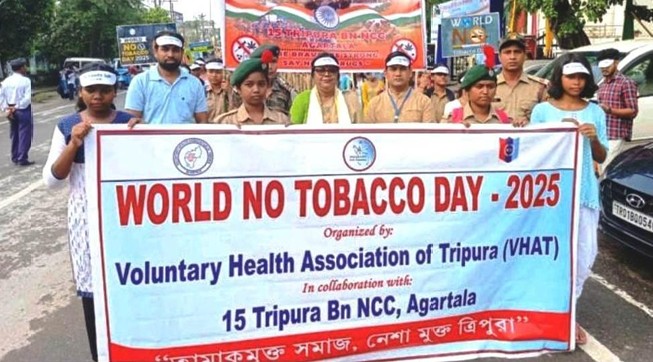
|
|
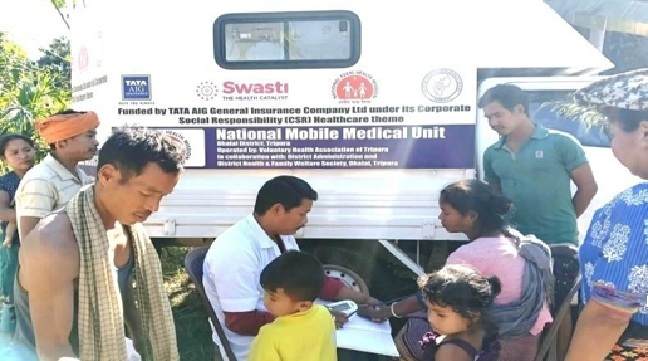
| Mobile Medical Unit (MMU) – Dhalai |
|
Free treatment by VHAT Mobile Medical Unit in a remote area of Dhalai District of Tripura. |
| Aarohan (Targeted Intervention) Project - Khowai |
|
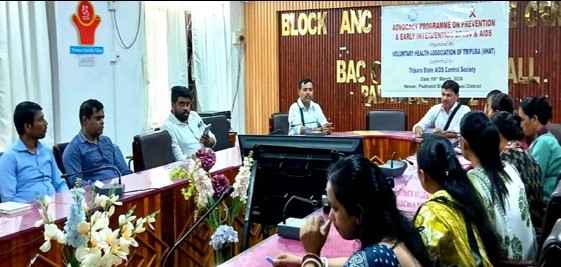
Meeting for preparation of Advocacy and Implementation Plan to combat the HIV transmission in targeted project area in Khowai District. |
| ASHA Training under Project Prerana |

ASHA Training |
|
| ICMR Study |

Field Data Collection for ICMR Study |
Mobile Medical Unit (MMU) Project
Project Overview:
Voluntary Health Association of Tripura initiated Mobile Medical Unit (MMU) Project in Dhalai District of Tripura from July 2025, with financial support from SWASTI and technical support from the district health authority of Dhalai District.
The central goal of the MMU project was to bridge the gap in healthcare access for hard-to-reach communities through a multi-dimensional approach of direct service delivery and community engagement.
- Target Areas: The intervention focused on four key blocks: Dumburnagar, Ganganagar, Manu, and Chawmanu.
- Core Objectives: Improving access to primary healthcare, promoting early disease detection, and increasing awareness of healthy life practices.
- Operational Integration: The project worked in close collaboration with the District Health & Family Welfare Society, Dhalai and ensuring convergence with existing government health systems.
Key Outcomes and Impact:
The project successfully acted as a vital access point for communities with previously limited interaction with formal health systems.
- Outreach Impact: A total of 61 mobile health camps were organized within March 2026.
- Beneficiary reach: The initiative reached 2,812 beneficiaries across the targeted intervention areas.
- Clinical Services: Services included screenings for blood pressure, blood sugar, alongside basic treatment and referral support. Screening of suspected TB & Malaria patients.
- Behavioural Change: Increased participation and a better understanding of disease prevention, particularly regarding non-communicable diseases (NCDs) were observed throughout the project period.
Community Engagement and Awareness:
Beyond clinical services, VHAT team utilized personalized interactions to foster long-term health improvements. These personalized interactions enabled deeper engagement with beneficiaries, allowing for better understanding of individual health needs and promoting long-term behavioural change.
Educational topics included: Balanced nutrition and physical activity • Avoidance of tobacco and alcohol • Personal hygiene and family planning • Non-communicable disease (NCD) prevention.
Health System Strengthening:
The project also focused on enhancing the capacity of the local health infrastructure through donation of specialized medical equipment.
| Equipment Donated | Purpose/Impact |
|---|---|
| Micro Typing Centrifuge & an X-Ray machine | Enhanced diagnostic and clinical service capacity. |
| Semi-Auto Hematology Analyser (3-part) | Supported smoother operations at healthcare facilities. |
| Suction Machine (1/2 HP HYVAC) | Improved service delivery for advanced care. |
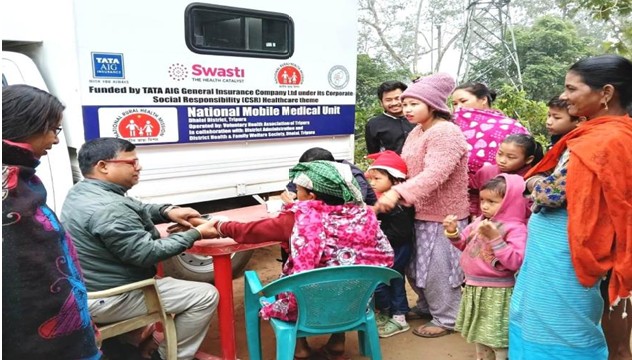

Beneficiaries in remote areas getting free Health Care services
The MMU Project in Dhalai District was recognized as an effective and scalable model for inclusive healthcare. By combining mobile delivery of required medicines with community mobilization and system strengthening, the initiative significantly improved health outcomes and strengthened the link between vulnerable communities and the public healthcare system. The efforts of the VHAT team were formally appreciated by district health authorities for their contribution to the region.
Aarohan (Targeted Intervention) Project in Khowai District
(Advancing Awareness and Outreach for HIV/AIDS Testing and Prevention)
Project Overview: A Targeted Intervention (TI) Programme for Prevention & Control of HIV/AIDS was initiated in Khowai District by VHAT with support of the Tripura AIDS Control Society (TSACS) from 15th February 2026. The project specifically focused on high-risk and vulnerable groups, like Man Having Sex with Man (MSMs), Transgenders (TRs), and Injecting Drug Users (IDUs), aiming to reduce the transmission of HIV and improve access to prevention, care, and support services. The project was being implemented across various hot-spots and vulnerable locations in Khowai District.
Objectives of the Project:
- To prevent and control the spread of HIV/AIDS among MSMs, TRs, and IDUs
- To promote safe practices and behavioural change
- To ensure access to HIV testing, counselling, and treatment services
- To distribute preventive materials such as condoms and sterile needles/syringes
- To reduce stigma and discrimination associated with HIV/AIDS
Key Activities Conducted:
a) Identification and Registration
- Mapping and identification of target population (MSMs, TRs, IDUs)
- Registration of beneficiaries for regular follow-up and services
b) Awareness and Behaviour Change Communication (BCC)
- Regular awareness sessions on HIV/AIDS prevention
- One-to-one counselling and group discussions
- Distribution of IEC (Information, Education, Communication) materials
c) Health Services
- HIV testing and referral to ICTC centres
- Linkage to ART centres for HIV-positive individuals
- Facilitation of STI screening and treatment
d) Condom and Needle/Syringe Distribution
- Free distribution of Condoms and Lubricants among MSMs and TRs
- Prevention of sharing of Needle & Syringe
- Promotion of safe injection practices
e) Community Outreach
- Outreach workers engaged in regular field visits
- Peer educators involved in mobilizing the community
- Building trust and rapport with target groups

Screening Test Camp at Khowai district
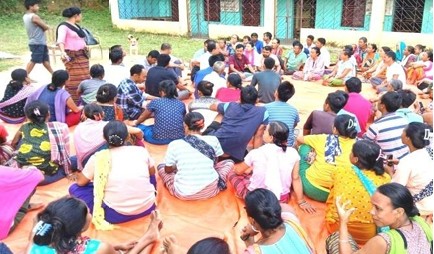
Community Meeting at Padmabil, Khowai district
Achievements (from 15th February to 31st March 2026):
- 50 numbers of MSMs, TRs, and IDUs identified and registered
- Conducted 5 awareness trainings with community regarding HIV/AIDS prevention and early intervention
- Improved uptake of HIV testing and counselling services
- Strengthened linkage with government health services
ASHA Training on HBNC, HBYC & IYCF Under Project Prerana
Background: PRERANA (Promoting Equity and Reproductive Health Access for North-East India) project funded by the American India Foundation (AIF) was initiated in 2024 with a focus on strengthening Sexual and Reproductive Health services in the region. Due to unforeseen circumstances, the project could not be continued in 2025 following the conclusion of support from the funding partner. In alignment with the organization's commitment to community well-being, the unutilized funds were strategically redirected towards capacity-building initiatives, including training programmes for ASHA workers. This reallocation was undertaken with due approval from the AIF, ensuring transparency and responsible utilization of resources.
In partnership with the District Health & Family Welfare Societies of Khowai, Agartala, and Ambassa (Dhalai) consecutively, Voluntary Health Association of Tripura (VHAT), conducted a series of three-day trainings aimed at empowering ASHA (Accredited Social Health Activist) workers. These sessions, held in February and March 2026, focused on reinforcing grassroots service delivery for maternal and child health.
Core Objectives and Specialized Care:
Primary goal was to equip ASHA workers with updated protocols and practical skills to improve health outcomes in underserved and remote areas. The training specifically targeted three critical intervention areas:
- HBNC: Home-Based New-born Care
- HBYC: Home-Based Young Child Care
- IYCF: Infant and Young Child Feeding
Training Methodology and Content:
Facilitated by Health Department’s Resource Persons and Public Health Professionals, the sessions utilized interactive methods such as group discussions, demonstrations, and case-based learning. Key thematic areas included:
- Newborn Care: Essential care practices and early identification of danger signs.
- Monitoring & Referral: Standardized growth monitoring and establishing timely referral mechanisms.
- Nutrition: Specialized counselling for caregivers regarding infant nutrition.
- Communication: Strategies for effective engagement with families at the household level.
Outcomes and Impact:
The trainings successfully created active participation from 150 ASHA workers, who integrated their own field experiences into the learning process. The initiative resulted in –
- Enhanced Capacity: Frontline workers (participants) demonstrated increased confidence and a deeper understanding of HBNC, HBYC and IYCF interventions.
- Improved Detection: The training was expected to lead to earlier detection of health risks and better nutritional practices within communities.
- System Reinforcement: By strengthening the skills of frontline workers, the project reinforces the overall community health delivery system in Tripura.

ASHA Training in West Tripura District

ASHA Training in Dhalai Tripura
ICMR-NCDIR Implementation Research Project
Voluntary Health Association of Tripura (VHAT) is currently serving as a collaborating partner in a significant implementation research project focused on improving clinical outcomes for diabetes and hypertension, managed under the ICMR & National Centre for Disease Informatics and Research (NCDIR). This initiative targeted to empower primary care physicians across both public and private sectors.
Project Scope and Location:
- Start Date: VHAT has been active in this initiative since September 2025.
- Geographic Focus: The project is being carried out in selected Control and Intervention Blocks within the West Tripura and North Tripura districts.
Primary Objective:
To strengthen primary healthcare system and reduce the burden of non-communicable diseases (NCDs) through sustainable interventions.
Key Activities and Implementation:
- VHAT’s role was to collect the data under the guidance of the Scientist - E (Medical), ICMR – NCDIR Bengaluru to submit the collected data online & offline to the NCDIR.
- Monitoring & Data Collection: Engaging in field-level data collection, including Patient Exit Forms & Health Facility Assessment forms to establish a real-time evidence base for Non-Communicable Diseases (NCDs) management challenges.
- Digital Integration: Emphasizing the use of digital tools and strengthening reporting mechanisms to align with national research goals.
Impact and Commitment:
The project aims to improve patient access to quality care while fostering collaborative networks within the state's healthcare infrastructure. VHAT remained committed to ensuring the project's scalability and effectiveness to achieve long-term improvements in clinical outcomes for NCDs in Tripura.
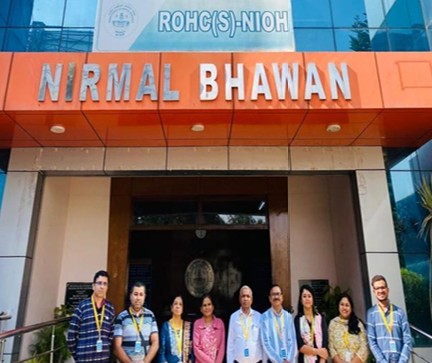
Study Team with the Scientist – E (Medical) in front of the ICMR – NCDIR Building, Bengaluru.
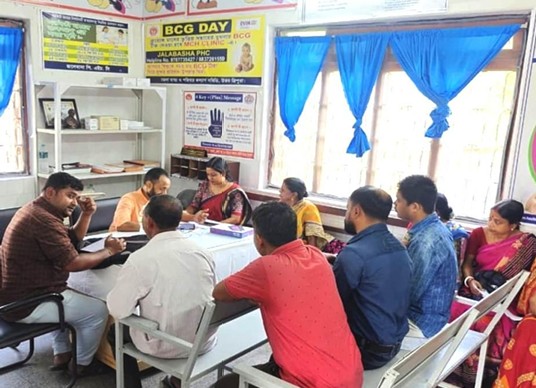
On field visit and data collection by the representatives of VHAT for ICMR Research project
Non-communicable diseases (NCDs) Context:
Non-communicable diseases (NCDs) are the leading cause of mortality in India. The four major NCDs—cardiovascular diseases (CVDs), cancers, chronic respiratory diseases (CRDs), and diabetes—are primarily driven by behavioural risk factors like tobacco and alcohol use, unhealthy diets, and physical inactivity.
Leading Causes of NCD Burden:
- Cardiovascular Diseases (CVDs): Ischaemic heart disease is the single largest killer, causing roughly 13% of all deaths in the country.
- Diabetes: India has one of the world's largest diabetes populations, accelerating complications like chronic kidney disease and stroke.
- Cancer: Cancers, particularly breast, oral, and cervical cancers, represent a rapidly growing segment of the disease burden.